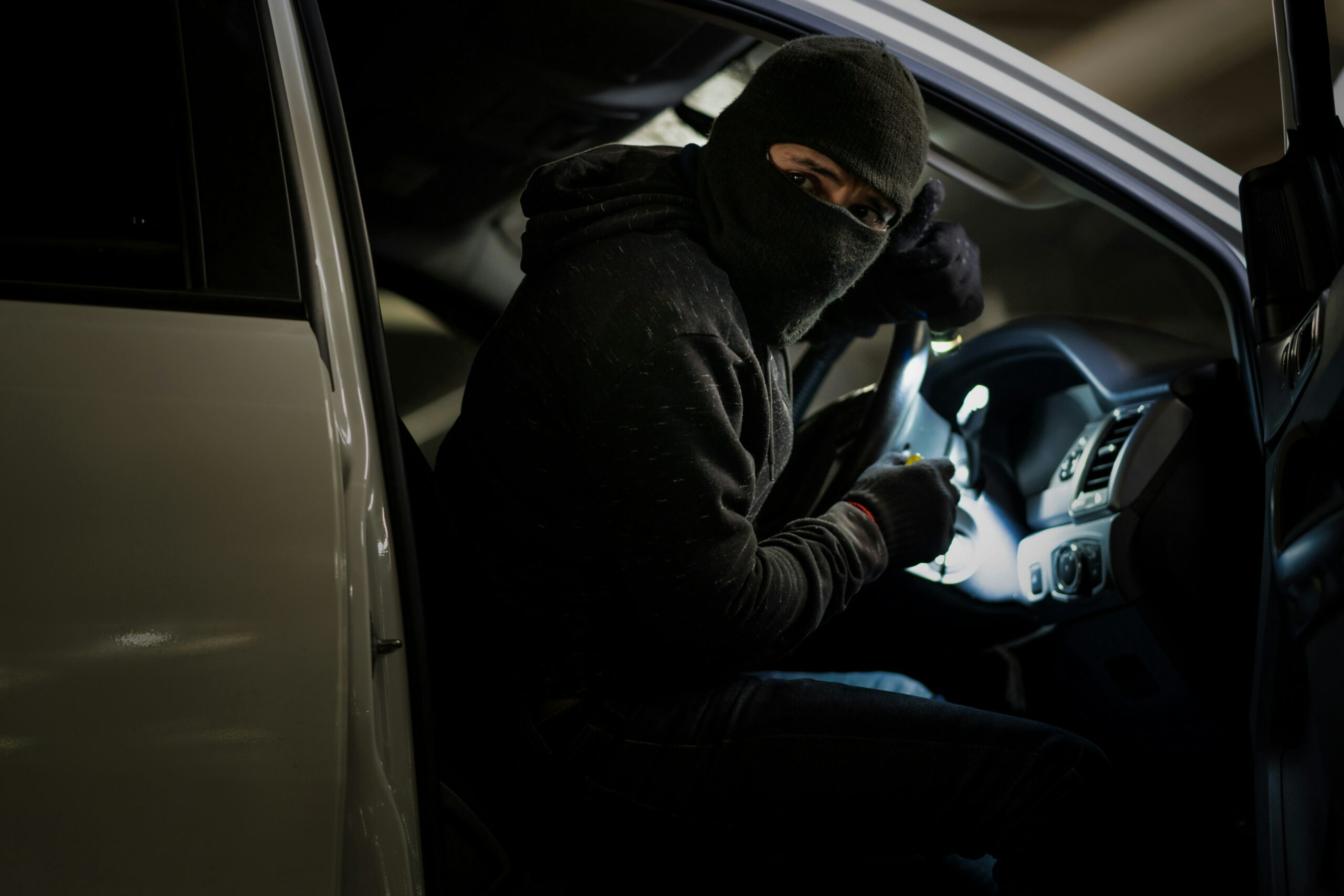
Cargo crime costs the UK economy around £700 million a year. For fleet operators, that figure isn’t abstract. Geotab’s latest survey found the average UK company experiences 32 cargo theft incidents per year, and losses from cargo theft have climbed by 438% since 2022. This trend shows up on renewal quotes just as much as it does in headlines, and it’s changing what insurers expect from the vehicles on your fleet.
For van and truck buyers, this makes security a key part of their purchasing decision. New vehicles can be specified with the right features at the point of order, and used ones can be fitted with the security installations insurers now want to see. Either way, it’s starting to have a direct effect on premiums.
Why commercial vehicles are targeted specifically
Armed robbery carries a sentence of up to 15 years. In comparison, cargo theft slips under the radar, treated as a lesser offence with far less risk attached. That gap in risk is a large part of why organised crime has moved into freight.
Part of the reason for this is how the crime is classified. Freight theft is currently recorded under the same offence as theft from a car – ‘theft from a motor vehicle’, regardless of the value of the goods taken. That classification affects how the crime is prioritised, sentenced, and measured, since there’s no separate category to track its true scale.
There has been discussion in parliament about making freight theft its own offence, though nothing is set in stone yet. It’s a sign that the industry itself sees this as a structural gap, and a genuine threat to goods and logistics operators.
How it’s being done
Curtain slashing is one of the most common methods, making up around a quarter of the cases that have been reported to cargo crime investigation. Thieves cut into the tarpaulin sheet on the side of a trailer while drivers sleep, then load stolen goods out through the gap. Side loading works in a similar way: a van backs up close to the trailer, a hole is cut to match both openings, and goods are passed hand to hand between vehicles to do things less conspicuously.
Not every theft involves breaking in. Exchange fraud relies on fake documentation to collect a load that was never meant for the thief. Some criminals simply approach a driver in a branded hi-vis, claim the delivery site is full, and redirect them to a ‘satellite yard’ down the road. Trailer hook up theft is more direct still: a loaded trailer, often left unattended at a distribution centre over a weekend, is simply hitched to a different cab and then driven away.
Drivers themselves can become an unwitting route in. Criminals have used mobile phone mast interception near fulfillment centres to read driver’s texts, identifying who’s in financial difficulty and offering cash for cooperation, tipping off a valuable load of agreeing to park in a specific spot. It’s a method that creates insider risk without a driver ever intending to be a part of it.
For vans, the picture is slightly different. Relay attacks on keyless entry remain the main vulnerability, where a signal from the key fob is captured and relayed to the vehicle without the key itself being anywhere nearby.
Why theft is rising
Truck parking is part of the problem. The Road Haulage Association estimates the UK is short by around 11,000 spaces, which leaves drivers with little choice but to drop in laybys with no lighting, CCTV or security. A truck parked overnight in an unmonitored spot is a prime target.
Cost of living pressure has changed what’s worth stealing, too. Everyday goods that once had little resale appeal, food and drink, for example, have become far more profitable to move on. One report found thefts of food and beverage goods rose as much as 79% in 2024 alone.
Law enforcement risk compounds both of these factors. Of the roughly 5,000 cargo crime cases handled by the UK’s national vehicle crime intelligence service each year, only around 300 result in an arrest. For organised gangs weighing up risk against rewards, these odds make freight theft a comparatively safe bet.
How this feeds into insurance claims
With cargo losses running as high as they are, and recovery rates staying low, insurance premiums are getting more expensive for the entire sector, not just the businesses that have been targeted. A rise in claims frequency and payout size across the industry pushes costs up for everyone renewing a fleet policy, whether they’ve had a theft or not.
Many businesses rely solely on insurance to cover cargo theft losses, but there is also value in investing in prevention or recovery. Insurers recognise this too, and increasingly reward it.
What reduces premiums
Insurer expectations for security have increased compared to years ago. Insurer expectations around security have increased in recent years. Many now check specifically for Thatcham-approved tracking, rather than accepting any aftermarket tracker as sufficient, since accreditation gives them a recognised standard to price against. The exact requirement can vary between insurers and vehicle types, so it’s worth checking directly what your policy specifies before assuming any tracker will qualify.
Tracking helps with recovery, but it doesn’t stop a theft happening in the first place. That’s where mechanical security earns its place alongside it. Deadlocks and slamlocks secure the door mechanism itself rather than the electronics, which means they’re unaffected by relay attacks of signal based methods entirely. OBD port locks close off the point thieves use to programme a new key once they’re inside a vehicle. For trailers, kingpin locks and trailer locks serve the same purpose, making the load itself harder to simply hitch up and drive away.
Getting it right from the outset
The best time to think about security is before the vehicle leaves the depot. At Norfolk Truck and Van, the team can fit alarms, deadlocks, cat protection and 24/7 cameras in-house for new and used vehicles.
Alarms and deadlocks can be added to any vehicle that needs an extra layer of security beyond standard central locking, which comes as default across the cab and load area on Renault vehicles. For loads of higher value, additional locking can be specified on top of this.
Cat protection is available for vans, guarding specifically against catalytic converter theft, one of the most common and disruptive losses for van operators.
Ultimately, you are more likely to receive reasonable theft insurance coverage if security is robust and clearly planned from the start. It’s a conversation worth having with your dealer before you buy, and one the team are always happy to have.
If you’re buying a new vehicle, ask your local Norfolk Truck and Van depot where security options can be fitted before we hand it over. Send us an enquiry or get in touch with your local depot in Norwich (01603 253 300), Ipswich (01473 834200) or London (0208 804 1266). The team is happy to talk you through what’s right for the vehicle, and how you can be best prepared against vehicle theft.